
HERNIA REPAIR
Dr. Waleed Alasmar has extensive experience in laparoscopic surgery, providing precise and safe procedures.
We aim to support you at every stage of your health journey.
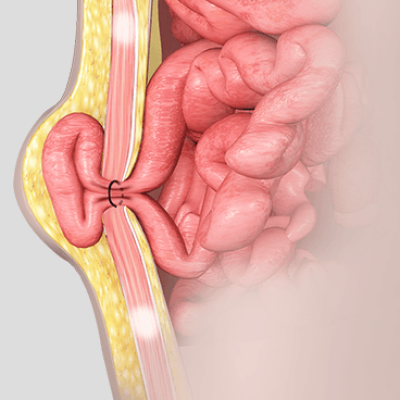
Table of Content
- 1️⃣-What Is a Hernia ?
- 2️⃣-What are kinds of hernia?
- 3️⃣-What are Symtoms of a Hernia?
- 4️⃣-What are Complications of a Hernia?
- 5️⃣ Modern Surgical Treatment and Laparoscopy.
- 6️⃣ Recovery Period After Hernia Surgery.
- 7️⃣ Important Tips After Hernia Surgery.
1️⃣-What Is a Hernia ?
A hernia is a medical condition that occurs when an internal organ, most commonly the intestines or fatty tissue, protrudes through a weak point or abnormal opening in the surrounding muscle wall. A hernia often appears as a visible bulge, which becomes more noticeable when standing or during physical effort, and may decrease or disappear when lying down.
2️⃣-What are kinds of hernia?
There are several types of hernias, classified according to their location, including:
* Inguinal hernia: The most common type, occurring in the groin area and more frequently affecting men.
*Umbilical hernia: Appears around the navel and may affect both children and adults.
*Femoral hernia: Occurs below the groin and is more common in women.
*Incisional hernia: Develops at the site of a previous surgical incision due to weakness in the abdominal wall.
*Hiatal (diaphragmatic) hernia: Occurs when part of the stomach protrudes into the chest through the diaphragm.
3️⃣-What are Symtoms of a Hernia?
Hernia symptoms vary from person to person and may include:
*A visible bulge or swelling in a specific area.
*Pain or discomfort, especially when standing, coughing, or lifting heavy objects.
*A sensation of heaviness or tightness at the hernia site.
*In some cases, a hernia may cause no noticeable symptoms.
4️⃣-What are Complications of a Hernia?
If left untreated, a hernia may lead to serious complications, including:
*Incarcerated hernia: When the protruding tissue becomes trapped and cannot be pushed back into place.
*Strangulated hernia: A medical emergency in which blood supply to the herniated tissue is cut off.
*Severe and persistent pain.
*Digestive symptoms such as nausea and vomiting.
5️⃣-Modern Surgical Treatment and Laparoscopy.
Surgical repair is the definitive and most effective treatment for hernias. With advances in medical technology, laparoscopic hernia repair has become one of the most modern and safe treatment options.
This technique involves small incisions and the use of specialized instruments and a high-definition camera to repair the hernia and reinforce the abdominal wall with a medical mesh.
Key benefits include reduced postoperative pain, faster recovery, fewer complications, and better cosmetic outcomes compared to open surgery.
6️⃣-Recovery Period After Hernia Surgery.
The recovery period varies depending on the type of surgery and the patient’s overall health.
In most cases, patients are encouraged to begin light movement on the same day or the day after surgery.
Recovery is generally faster after laparoscopic surgery, allowing most patients to return to daily activities within a few days, while avoiding heavy lifting and strenuous activity for approximately two to four weeks.
7️⃣-Important Tips After Hernia Surgery.
*Follow your surgeon’s instructions and take prescribed medications as directed.
*Keep the surgical wound clean and monitor it daily.
*Engage in light activity and regular walking without overexertion.
*Avoid heavy lifting and strenuous exercise.
*Maintain a fiber-rich diet to prevent constipation.
*Seek medical attention immediately if severe pain, fever, or unusual symptoms occur.
CONTACT US
We are happy to support you. If you have any questions about bariatric surgery and advanced Laparoscopic Surgery, the services we provide, or would like to get a free consultation, please do not hesitate to contact us and we will respond as soon as possible. We are here to support you on your journey to a healthier life!